Busan Shark Bukangi Vanishes: What Happened at North Port and Why
Busan shark Bukangi is a 3m endangered female black shark that drew about 1.67 million people to North Port. It hasn't been confirmed since Oct 27. Here's what happened.
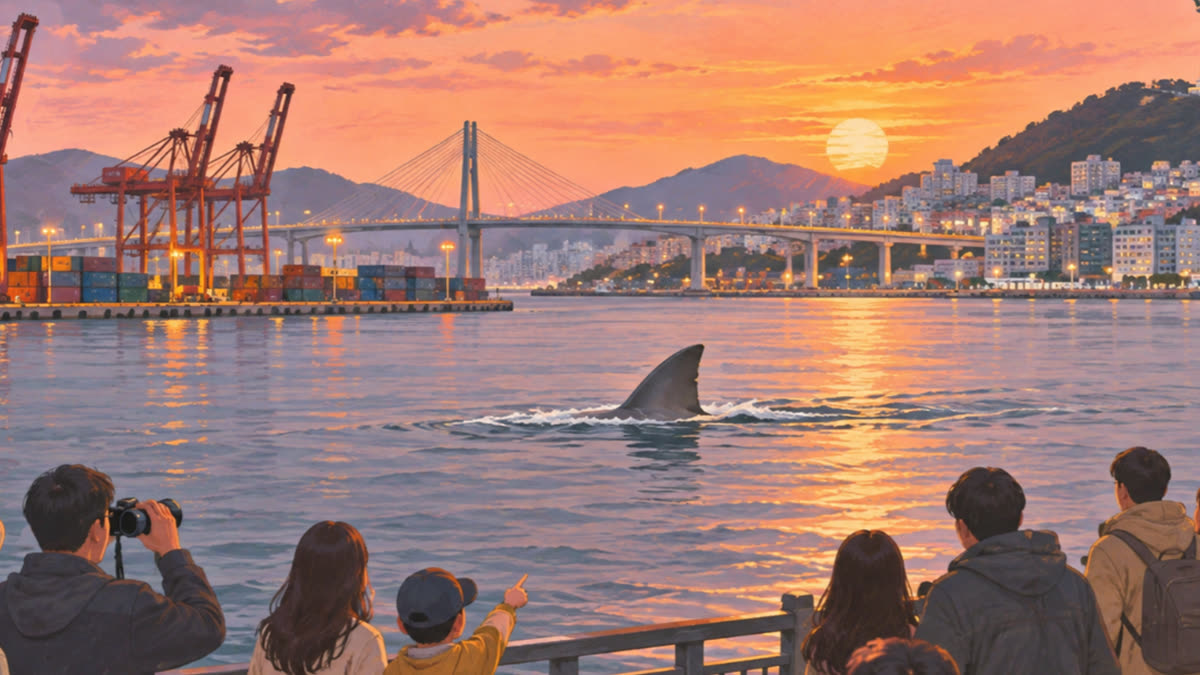
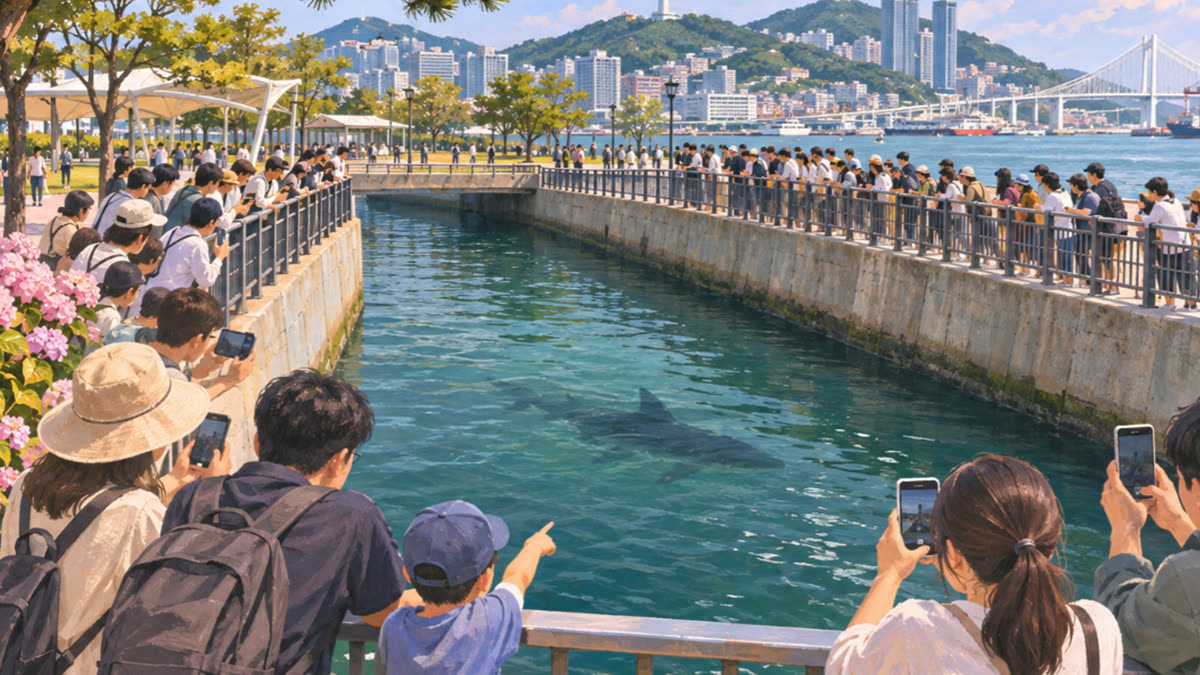
Bukangi (부캉이), the Busan shark that drew huge crowds, has not been confirmed anywhere since October 27. On October 30, Korea's National Institute of Fisheries Science (NIFS) stopped its regular checks at the site. For just over a month, a female shark about 3 meters long lived in a narrow artificial canal at Busan North Port Waterfront Park. During that time the quiet harbor park became one of the most visited places in Korea. Experts now think falling sea temperatures have sent the shark into deeper water, or that it has already left the harbor for the open sea.
If you saw the story on Korean social media and wondered what it was about, here is the short version.
What is the Busan shark Bukangi?
Bukangi is the nickname the public gave the shark. It was first found on September 18, 2026 in the artificial canal (인공 수로) of Busan North Port Waterfront Park (북항 친수공원), on redeveloped harbor land near Busan Station.
NIFS first thought it was a bronze whaler (무태상어), a close relative that is hard to tell apart by eye. On October 6, after studying close-up video, NIFS confirmed it was a black shark (흑상어), the species usually called the dusky shark in English. The deciding feature was a clear ridge of skin between the first and second dorsal fins, which the bronze whaler does not have. NIFS said the shark is a female and about 3 m long.
What Korean reports say about the species:
- It can reach about 4.2 m in length.
- It is listed as Endangered (EN) on the IUCN Red List because its numbers are falling.
- It gives birth to live young, and it grows and reproduces slowly.
- It mostly prefers water between about 18°C and 26°C and migrates as the temperature changes.
- Until 2019 it was treated as the same species as the bronze whaler in Korea. It was first reported as a separate species in Korean waters that year.
How many people came to see it?
The park usually gets about 2,000 visitors a day. Once word of the shark spread, those numbers jumped:
| Date (2026) | What happened |
|---|---|
| Sept 24 (first day of the Chuseok holiday) | More than 100,000 visitors in one day |
| Three-day Gaecheonjeol (National Foundation Day) holiday, early October | About 264,000 visitors |
| Oct 5 | Total visitors passed 1 million |
| Oct 9–11 (Hangul Day holiday) | About 205,000 visitors, roughly 68,000 a day |
| Oct 17 | Total reached about 1.54 million |
| Around Oct 21 | Total passed about 1.67 million |
Cafés, convenience stores and restaurants around Busan Station also got busier. The shark arrived during a record-paced year for Busan tourism. According to the Busan city government, the city welcomed 3,434,620 foreign visitors from January to August, up 45.9% from the same period last year. That passed the 3 million mark about two months earlier than in 2025.
Why didn't the shark just swim away?
The canal is narrow and shallow, only about 3–4 m deep, and the shark seemed unable to find its way out. Busan Coast Guard and the city's fire and disaster teams made two attempts to guide it out. One was on September 29, and neither worked. A net that had been set up after the second attempt was taken down on October 3 to leave a clear path to the sea. Officials then chose to wait and let the shark leave on its own.
Marine scientists were concerned. The shark had wounds across its body, and no one saw it eat, even though mullet live in the canal. Red tissue was once seen near its belly, and some people guessed it was about to give birth. NIFS said the shark was actually pushing out part of its gut to clean it, which is normal behavior.
Where did Bukangi go?
The story ended at sea:
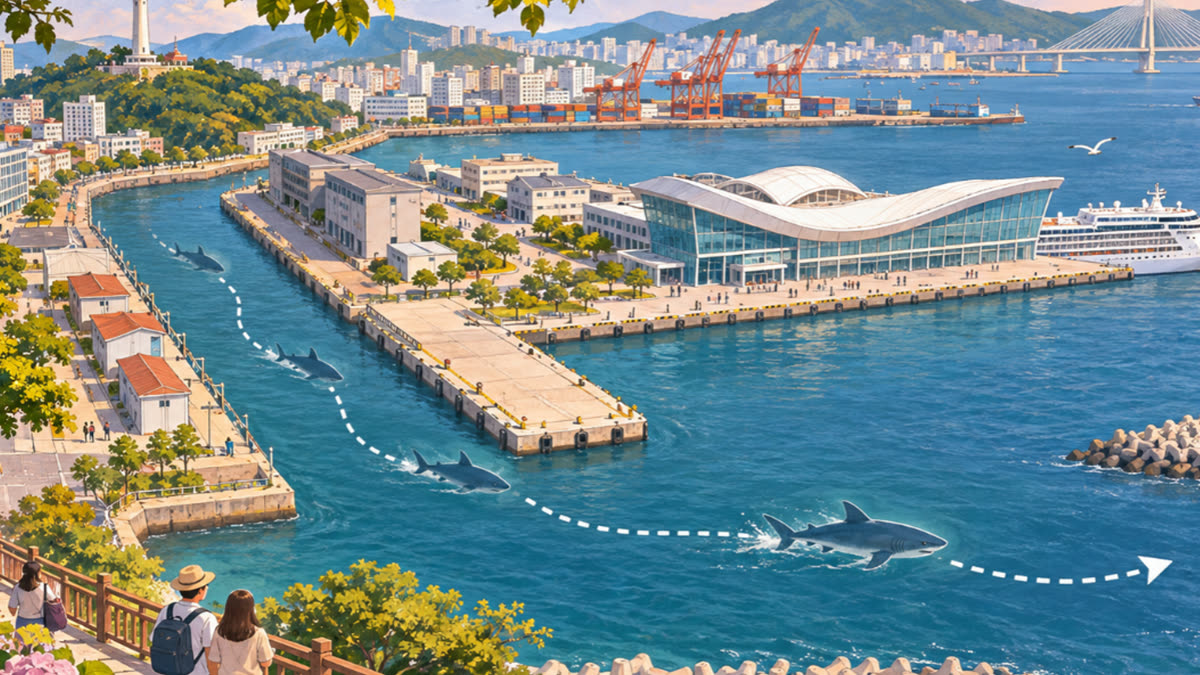
- October 21: A third guiding operation worked. After 33 days, the shark left the canal and was later seen near North Port Pier No. 1.
- From October 24: It appeared in the water off the International Passenger Terminal pier, about 2 km away.
- October 27: This is the last time NIFS monitoring confirmed it.
- October 28: Surface water off North Port fell below 20°C for the first time this autumn. It had been around 25°C when the shark first appeared.
- October 30: NIFS stopped regular site checks and now goes out only when the public reports a sighting. As of October 31, no reports had come in.
Choi Yoon, a professor emeritus of marine biology at Kunsan National University, told Korean media that cooler water keeps the shark swimming deeper and surfacing less, so people are less likely to spot it. He said it may now be off Pier No. 7 or may already have left North Port. He also said the shark was in poor health when it left the canal, but he expects it to recover in open water and head out to sea. The water is forecast to cool to about 15°C by mid-November, so a return seems unlikely.
Is the North Port Waterfront Park still worth visiting?
It is worth a stop if you are already in Busan, but don't make the trip for the shark. The park is a harbor-side promenade within walking distance of Busan Station (KTX and Metro Line 1), with wide views of the port. It is easy to pair with time around the station or a visit to the nearby International Passenger Terminal. If you are planning a trip this autumn, see our guide to the Korea Grand Festival 2026.
Good to know
- Don't expect to see the shark. As of November 1, 2026, Bukangi has not been confirmed since October 27.
- If you see a large fin in Busan harbor, report it to the authorities and keep your distance. NIFS is now relying on these public reports.
- The species is endangered. Bukangi is a wild animal, not an attraction.
FAQ
What kind of shark is Bukangi?
NIFS identified it as a black shark (흑상어), usually called the dusky shark in English. It is a female about 3 m long. The IUCN lists the species as Endangered.
Can I still see the Busan shark?
Probably not. It left the canal on October 21, and NIFS last confirmed it on October 27 off the International Passenger Terminal. Experts think cooling water pushed it deeper or out to sea.
How long was Bukangi in the canal?
About 33 days, from September 18 to October 21, 2026. It left during the third guiding attempt.
Where is Busan North Port Waterfront Park?
It is on the North Port waterfront, within walking distance of Busan Station.
Sources
- Wikitree – Bukangi missing for five days, experts weigh in (Oct 31, 2026)
- Weekly Kyunghyang – Bukangi confirmed as endangered 3m female black shark (Oct 6, 2026)
- JoongAng Economy News – Busan foreign visitors top 3.43 million; 1.35 million flock to North Port (Oct 13, 2026)
Facts were checked against the sources above; the article itself was written by Seoul Sidekick. Report an error